
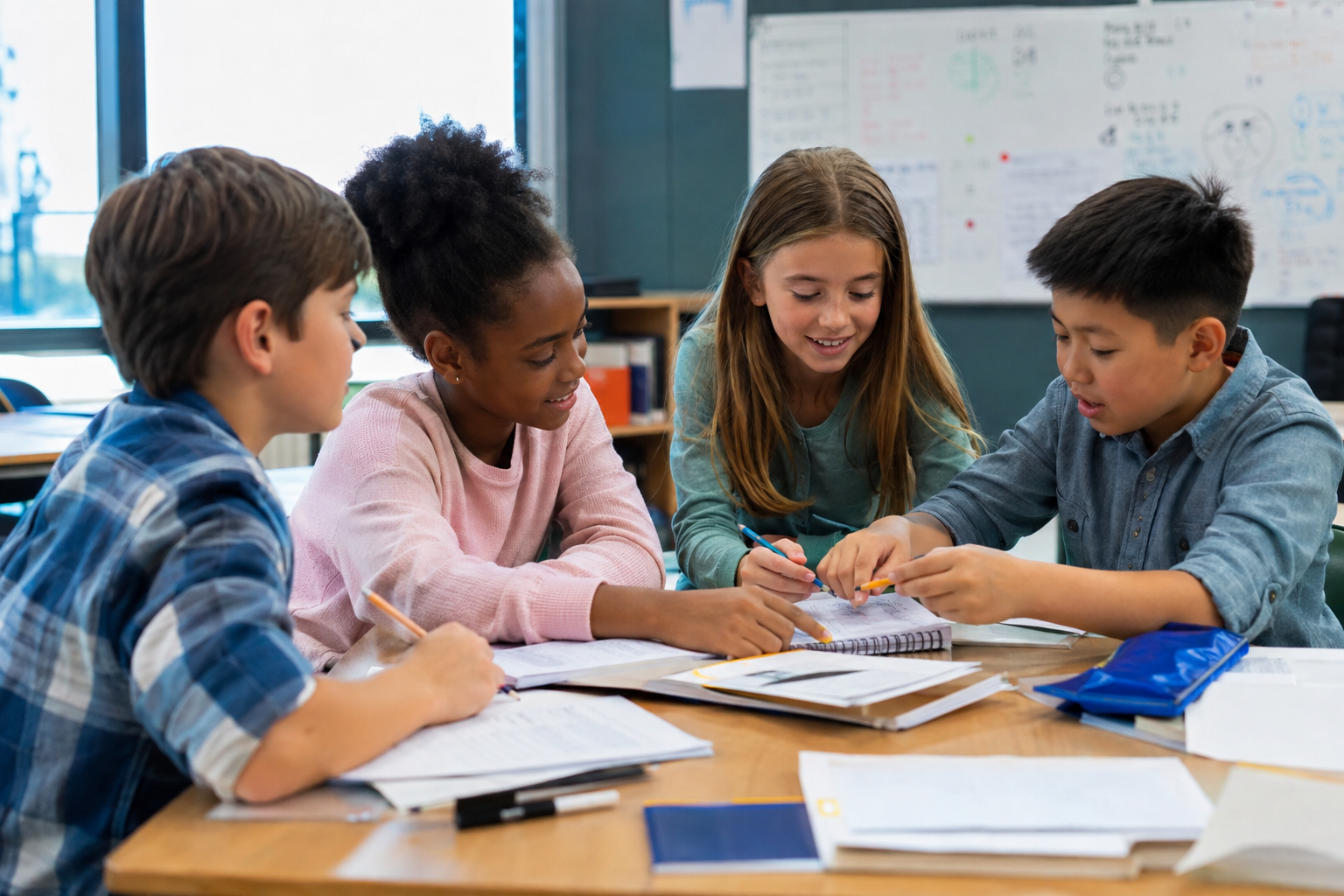
Collaborative learning has become an important part of modern education because it encourages students to learn together, share ideas, solve problems, and support one another. In a traditional classroom, students often listen to a teacher and complete assignments individually. While this method can be useful, collaborative learning gives students more opportunities to participate actively in the learning process. It helps them understand difficult topics, improve communication, develop confidence, and build important social skills.
The main goal of collaborative learning is to create an environment where students work together toward a common learning objective. They may complete group projects, discuss questions, solve problems, conduct research, or teach concepts to one another. When students become active participants instead of passive listeners, their interest in education can increase. This can have a positive effect on student performance and overall academic development.
What Is Collaborative Learning?
Collaborative learning is an educational approach in which students work together to achieve a shared academic goal. Instead of depending only on the teacher for information, students exchange knowledge and learn from the experiences and ideas of their classmates.
Collaborative learning can take many forms. Students can work in pairs, small groups, classroom teams, or larger discussion groups. Teachers can organize activities according to the subject, age, and abilities of students. The important part is that students communicate, cooperate, and contribute to the learning activity.
This approach does not mean that students simply sit together and complete an assignment. Effective collaborative learning requires participation from every student. Each student should have a meaningful role and should have the opportunity to express ideas, ask questions, and contribute to the final result.
Improves Understanding of Difficult Topics
One of the biggest benefits of collaborative learning is that it can improve students’ understanding of difficult subjects. Sometimes students find it easier to understand an idea when another student explains it in simple language.
For example, a student who understands a mathematics problem can explain the steps to a classmate. While explaining the problem, the student also reviews their own knowledge. The other student gets an explanation that may feel easier to understand than a textbook or lecture.
Group discussions also allow students to compare different ways of thinking. When several students discuss the same topic, they may discover different solutions and perspectives. This helps them understand the subject more deeply and remember important information for a longer time.
Increases Student Engagement
Student engagement is an important factor in academic success. When students are interested in classroom activities, they are more likely to pay attention, participate, and complete their work.
Collaborative learning makes classrooms more interactive. Instead of listening to a lesson for a long period, students can discuss questions, share opinions, solve problems, and complete practical activities with their classmates. These activities can make learning more enjoyable and meaningful.
Students who are normally quiet may also become more active when they work in small groups. A smaller group can provide a comfortable environment where students feel less pressure when sharing their ideas. As participation increases, students can become more connected to the learning process.
Develops Communication Skills
Good communication is necessary for success in education, work, and everyday life. Collaborative learning provides students with regular opportunities to practice communication.
During group activities, students need to explain their ideas clearly and listen carefully to others. They learn how to ask questions, give suggestions, express opinions, and respond respectfully. These communication skills can help students perform better in presentations, discussions, and written assignments.
Collaborative learning also teaches students that communication is not only about speaking. Listening is equally important. Students learn to consider different opinions before making decisions. This creates a classroom environment where students can learn from one another.
Builds Confidence in Students
Many students hesitate to speak in front of the whole class because they are afraid of making mistakes. Collaborative learning can help reduce this fear by giving students opportunities to practice in smaller groups.
When students successfully contribute to a group discussion or help solve a problem, they can develop greater confidence in their abilities. Positive feedback from classmates can also encourage students to participate more often.
As confidence grows, students may become more willing to answer questions, present their work, and take part in classroom activities. This improved confidence can support better academic performance over time.
Encourages Critical Thinking
Critical thinking is another important benefit of collaborative learning. Students are not simply expected to memorize information. They are encouraged to analyze ideas, compare solutions, ask questions, and make decisions.
For example, a teacher may give a group a real world problem and ask students to find a solution. Each student may have a different opinion. The group must discuss these opinions and decide which solution is most effective.
This process teaches students to think carefully before accepting an answer. They learn that problems can have more than one possible solution and that good decisions require evidence and logical reasoning.
Promotes Problem Solving Skills
Problem solving is an important skill for students because they will face different challenges throughout their education and future careers. Collaborative learning gives them practical opportunities to develop this ability.
When students work together on a difficult task, they can divide the problem into smaller parts. One student may research information while another organizes ideas and another explains the final answer. By combining their skills, the group can often find solutions more effectively.
Students also learn that mistakes are a normal part of the learning process. Instead of becoming discouraged by a difficult problem, they can ask their group members for suggestions and try different approaches.
Improves Social Skills
Education is not only about academic knowledge. Students also need social skills to communicate and cooperate with other people. Collaborative learning helps students develop these skills naturally.
Group activities teach students how to share responsibilities, respect different opinions, manage disagreements, and work toward a common goal. These experiences can help students become more responsible and cooperative.
Students also learn how to appreciate the strengths of their classmates. One student may be good at research, another may be skilled at writing, and another may be confident in speaking. Working together allows students to recognize that everyone can contribute something valuable.
Encourages Peer Learning
Peer learning is an important part of collaborative learning. Students often learn effectively when they explain concepts to one another.
A student may understand a topic differently from a teacher or textbook. When that student explains the concept to a classmate using familiar language, the explanation may become easier to understand.
Teaching others also strengthens the knowledge of the student who is explaining the topic. To explain something correctly, students need to organize their thoughts and remember important details. This makes peer learning beneficial for everyone involved.
Supports Different Learning Needs
Every student has different strengths, interests, and learning needs. Collaborative learning can provide a flexible environment where students support one another.
Some students may understand information quickly through discussion, while others may benefit from practical activities. Group work can combine different approaches and give students several ways to understand the same topic.
Teachers can also create groups carefully so that students with different strengths can learn from each other. This can make classroom learning more inclusive and supportive.
Improves Academic Performance
The combined benefits of collaborative learning can lead to improved student performance. Better understanding, greater engagement, stronger communication, increased confidence, and improved problem solving can all support academic progress.
Students who actively participate in learning are more likely to remember information and understand how to apply it. Group activities can also encourage students to take greater responsibility for their work.
However, successful collaborative learning requires proper planning. Teachers need to provide clear instructions, establish group responsibilities, and make sure that every student participates. Without guidance, some students may do most of the work while others remain passive.
Role of Teachers in Collaborative Learning
Teachers continue to play an important role in collaborative classrooms. Their role changes from being the only source of information to becoming a guide and facilitator.
A teacher can create meaningful group activities, monitor student participation, answer questions, and provide feedback. Teachers should also teach students how to work respectfully with others.
It is important for teachers to set clear goals for every activity. Students should understand what they need to learn and what they are expected to contribute. Regular feedback can help groups improve their teamwork and academic results.
How Technology Supports Collaborative Learning
Technology has made collaborative learning easier in modern classrooms. Students can use online platforms, shared documents, educational applications, video meetings, and digital discussion spaces to work together.
Technology allows students to collaborate even when they are not sitting in the same classroom. They can share research, edit documents, discuss assignments, and prepare presentations together.
Digital tools can also make group projects more organized. Students can divide tasks, track progress, and communicate with their classmates. When used properly, technology can strengthen collaborative learning and create more opportunities for student participation.
Conclusion
Collaborative learning is an effective approach that can improve student performance in many ways. It helps students understand difficult topics, become more engaged, communicate effectively, build confidence, develop critical thinking, and improve problem solving skills.
Working with classmates also prepares students for real world situations where cooperation and communication are important. Students learn that success is not always about working alone. Sometimes the best results come from sharing knowledge, listening to others, and combining different skills.
For collaborative learning to be successful, teachers need to create meaningful activities and make sure every student has an active role. When students receive proper guidance and support, collaborative learning can create a positive classroom environment where students learn from both their teachers and their classmates.
As modern education continues to change, collaborative learning will remain an important teaching strategy. By encouraging students to work together, schools can help them achieve better academic results while also preparing them with the communication, teamwork, confidence, and problem solving skills they need for the future.