
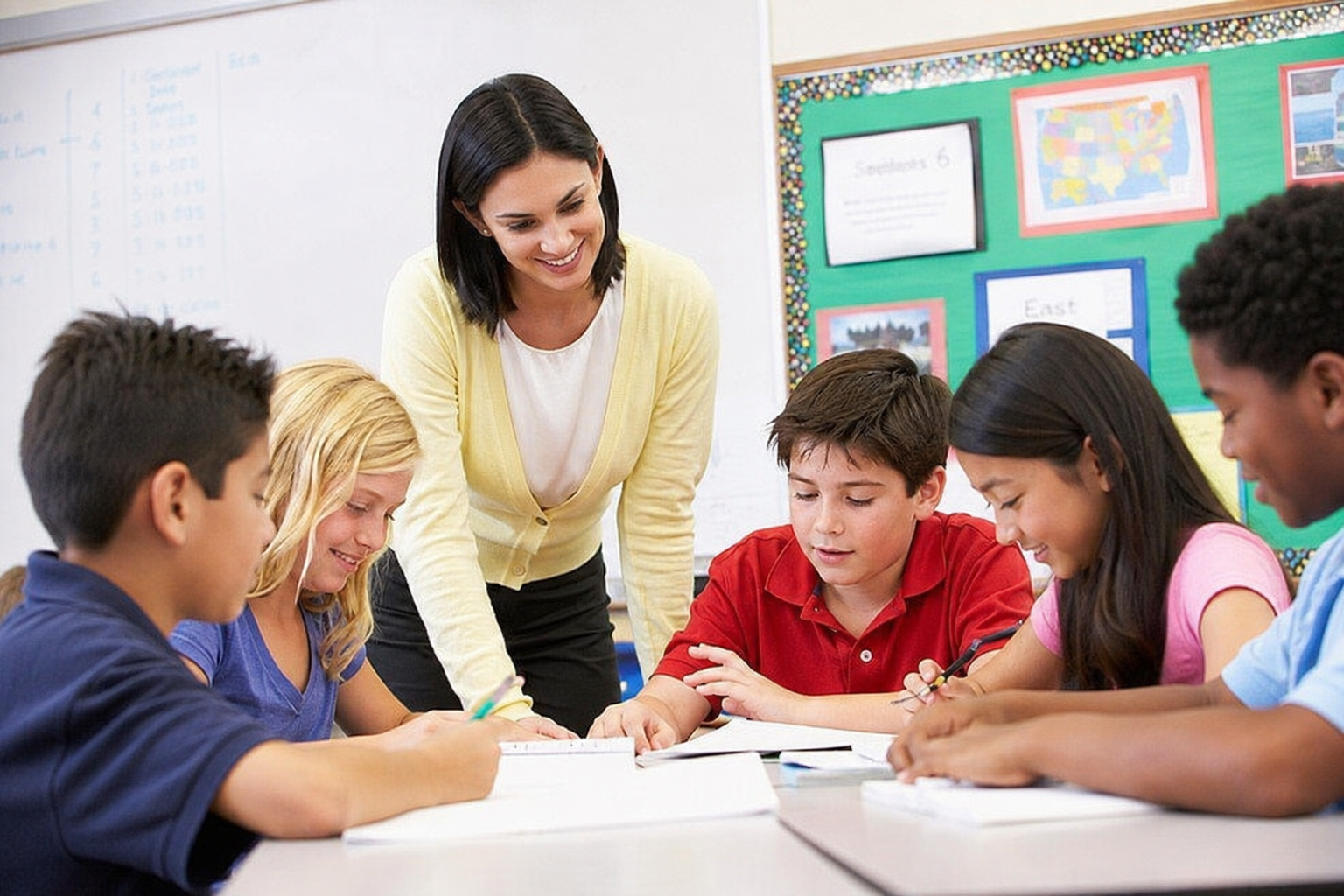
Education is changing with time, and students today need more than traditional classroom teaching to understand their lessons. One of the most effective approaches in modern education is interactive learning. Interactive learning allows students to take an active part in the learning process instead of only listening to a teacher. It includes classroom discussions, group activities, educational games, practical tasks, digital tools, quizzes, projects, and other activities that encourage students to participate.
The role of interactive learning in modern education has become very important because it makes learning more interesting, practical, and meaningful. When students actively participate in lessons, they can understand concepts more clearly and remember information for a longer time. Interactive learning also helps teachers understand the needs of their students and create a better learning environment.
What Is Interactive Learning?
Interactive learning is a teaching method in which students actively participate in the learning process. In a traditional classroom, a teacher may explain a topic while students listen and take notes. In interactive learning, students are encouraged to ask questions, share ideas, solve problems, discuss topics, and complete activities.
Interactive learning can happen inside and outside the classroom. Teachers can use educational technology, presentations, online quizzes, videos, group projects, classroom games, experiments, and real life examples to make lessons more engaging. The main purpose is to change students from passive listeners into active learners.
Interactive Learning Makes Education More Interesting
One of the biggest benefits of interactive learning is that it makes education more interesting for students. Many students lose concentration when lessons depend only on lectures and textbooks. Interactive activities give students an opportunity to participate and enjoy the learning process.
For example, a science teacher can explain a scientific concept through a simple experiment instead of only describing it in a textbook. Students can observe the results and discuss what happened. This type of experience can make the lesson easier to understand and more memorable.
Educational games can also make difficult subjects enjoyable. When students learn through activities that match their interests, they are more likely to stay focused and participate in class.
Improves Student Engagement
Student engagement is an important part of successful education. When students are engaged, they pay more attention, participate in discussions, and show greater interest in their studies. Interactive learning creates opportunities for students to become involved in every lesson.
Teachers can ask open questions, organize group discussions, conduct quizzes, and encourage students to explain their answers. These activities make students feel that their opinions are valuable.
Active participation can also help students become more confident. A student who regularly answers questions or presents ideas in front of classmates can gradually develop better communication skills and self confidence.
Develops Critical Thinking Skills
Modern education is not only about remembering information. Students also need to learn how to think, analyze information, solve problems, and make good decisions. Interactive learning supports the development of these important skills.
Problem solving activities are especially useful for developing critical thinking. Teachers can give students real life situations and ask them to find possible solutions. Students can work together, compare different ideas, and explain why they selected a particular answer.
This approach teaches students that there can sometimes be more than one way to solve a problem. It encourages them to think carefully instead of simply memorizing an answer.
Encourages Collaboration
Interactive learning also teaches students how to work with others. Group activities and classroom projects require students to communicate, share responsibilities, and respect different opinions.
For example, a teacher may divide students into small groups and give each group a project. Students can research the topic, discuss their findings, prepare their work, and present it to the class. During this process, they learn academic information as well as teamwork skills.
Collaboration is very important in modern education because students will need to work with different people in their future careers. Learning how to communicate and cooperate with others at an early age can prepare students for professional life.
Supports Different Learning Needs
Every student learns differently. Some students understand information quickly through reading, while others learn better through seeing, listening, discussing, or doing practical activities. Interactive learning gives teachers more ways to support different learning needs.
A lesson can include images, videos, discussions, practical activities, written tasks, and digital resources. This variety can help students understand information through methods that are comfortable and effective for them.
Interactive learning can also give teachers a better opportunity to identify students who need additional support. By observing students during activities, teachers can understand where they are struggling and provide appropriate guidance.
The Role of Technology in Interactive Learning
Technology has made interactive learning easier and more accessible. Modern classrooms can use computers, tablets, smart boards, educational websites, learning applications, digital quizzes, and online platforms.
Teachers can use videos to explain complicated topics, interactive presentations to make lessons visual, and online quizzes to check student understanding. Students can also use digital resources to research topics and complete projects.
However, technology should be used carefully. Digital tools should support the learning objective instead of becoming a distraction. A good teacher knows when technology can improve a lesson and when traditional teaching methods are more useful.
Interactive Learning Improves Memory
Students are more likely to remember information when they actively use it. Reading information once may not be enough for long term understanding. When students discuss a topic, answer questions, complete an activity, or apply knowledge to a real situation, they create stronger connections with the subject.
For example, learning mathematics through practical problems can help students understand how mathematical concepts are used in everyday life. Similarly, students studying history can learn through discussions, presentations, timelines, and role playing activities.
These methods make learning more active and can improve information retention.
Builds Communication Skills
Good communication is an important skill for education, employment, and everyday life. Interactive learning gives students regular opportunities to communicate with teachers and classmates.
Classroom discussions, presentations, debates, and group projects encourage students to express their thoughts clearly. They also teach students how to listen to others and respond respectfully.
Students who practice communication in the classroom can become more comfortable speaking in front of others. This can help them in academic presentations, interviews, workplace meetings, and social situations.
Makes Teachers More Effective
Interactive learning is not only beneficial for students. It can also help teachers improve their teaching methods. When students participate in activities, teachers receive immediate feedback about their understanding.
If many students answer a question incorrectly, the teacher can recognize that the topic needs more explanation. If students complete an activity successfully, the teacher can move forward with greater confidence.
This creates a more responsive classroom where teaching can be adjusted according to student needs.
Creates a Positive Classroom Environment
A classroom based on interactive learning can become more positive and supportive. Students have opportunities to communicate, participate, ask questions, and learn from mistakes.
When teachers encourage students instead of criticizing every mistake, students may become more willing to participate. They can understand that mistakes are a normal part of learning.
A positive classroom environment can reduce fear and encourage curiosity. Students who feel comfortable asking questions are more likely to seek help when they do not understand something.
Prepares Students for the Future
The purpose of modern education is to prepare students for a changing world. Future careers require more than academic knowledge. Students need creativity, communication, teamwork, problem solving, adaptability, and critical thinking.
Interactive learning helps develop these skills through practical classroom experiences. Instead of only learning what information is available, students learn how to use information.
Project based activities, research tasks, group work, presentations, and problem solving exercises can prepare students for real workplace situations. These experiences can help students become independent and responsible learners.
Challenges of Interactive Learning
Although interactive learning has many advantages, it can also create challenges. Some activities require additional time, resources, and careful planning. Teachers may also need training to use digital tools effectively.
Large classrooms can make group activities difficult to manage. Some students may also be shy and hesitate to participate. Teachers need to create inclusive activities where every student gets an opportunity to contribute.
The solution is not to avoid interactive learning but to use it thoughtfully. Teachers can begin with simple activities and gradually introduce more advanced methods.
Conclusion
The role of interactive learning in modern education is becoming increasingly important. It changes the classroom from a place where students only receive information into an environment where they actively participate in learning. Interactive learning can improve student engagement, critical thinking, communication, teamwork, memory, confidence, and problem solving skills.
Technology has created many new opportunities for interactive education, but effective learning does not depend only on digital tools. Good questions, group discussions, practical activities, classroom games, projects, and real life examples can also make learning more active.
When teachers use interactive learning in the right way, students can become more interested in their education and better prepared for future challenges. Modern education should focus not only on what students learn but also on how they learn. Interactive learning provides an effective way to create active, confident, creative, and independent learners who are ready to succeed in school, work, and everyday life.