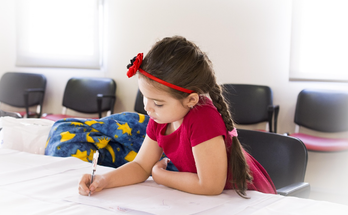
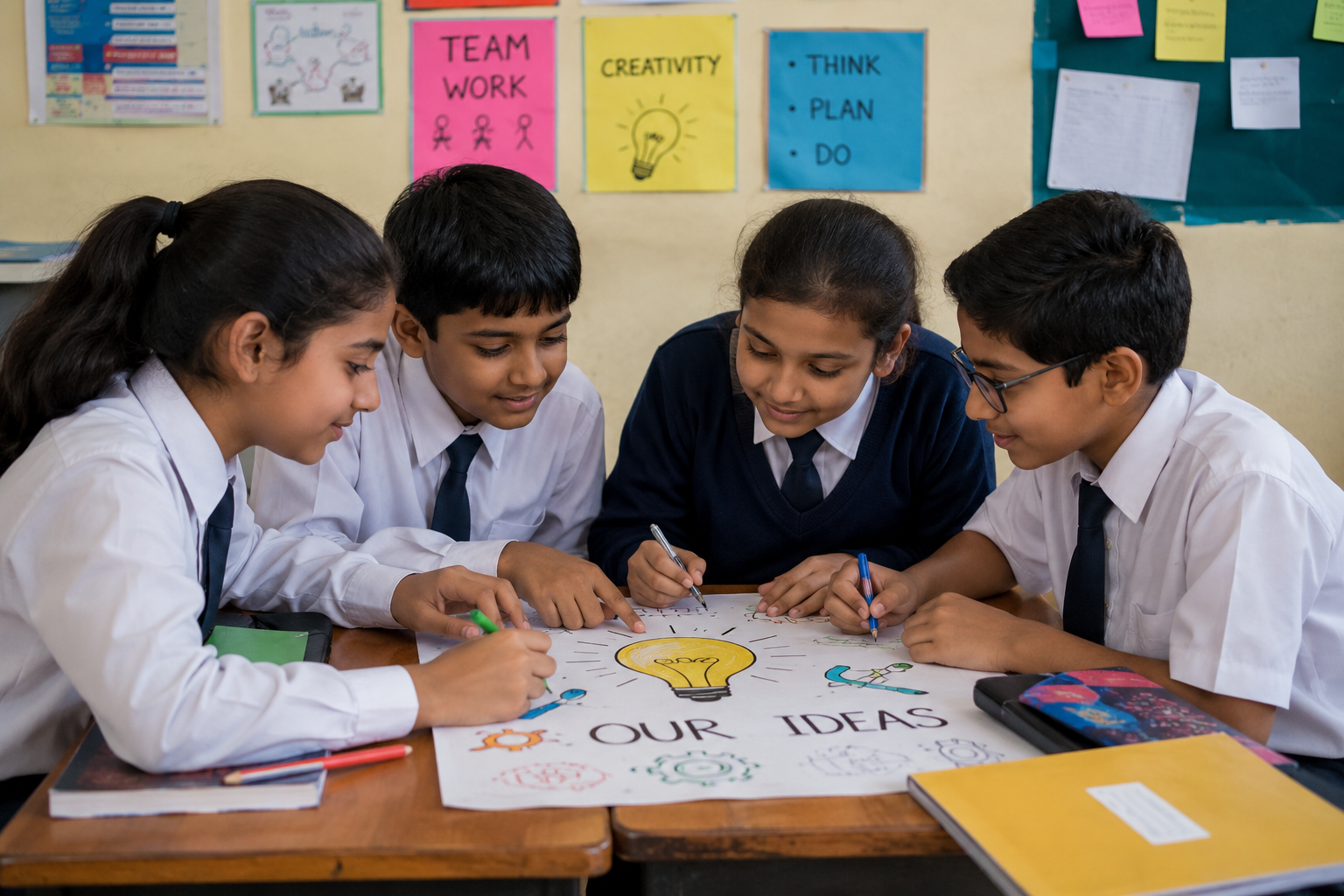
Creativity has become one of the most important parts of modern student learning. Education is no longer only about remembering information, completing assignments, and passing exams. Today, students need to understand ideas, solve problems, share their opinions, and find new ways to deal with challenges. Creativity helps students develop these abilities and prepares them for both academic success and future professional life.
Modern education is changing quickly because technology, communication, and workplace requirements are developing every day. Students are expected to think independently and use knowledge in practical situations. For this reason, creativity in education has become an essential skill rather than an optional activity. When students are encouraged to be creative, they become more interested in learning and more confident in expressing their ideas.
What Is Creativity in Student Learning?
Creativity in student learning means the ability to think of new ideas, explore different possibilities, and approach a problem in an original way. It does not only mean drawing pictures, writing stories, or making artistic projects. Creativity can be used in mathematics, science, technology, languages, business, and almost every other subject.
A creative student may find a different way to solve a mathematical problem, create an interesting science project, explain a difficult topic through a story, or develop a new idea during a group activity. Creativity allows students to move beyond memorization and understand how knowledge can be used in different situations.
Creativity Makes Learning More Interesting
One major benefit of creativity in modern student learning is that it makes education more enjoyable. Students can sometimes lose interest when lessons depend only on lectures, textbooks, and repeated exercises. Creative activities give students an opportunity to participate actively in the learning process.
Teachers can use discussions, projects, experiments, presentations, educational games, storytelling, and practical activities to make lessons more engaging. When students have the chance to create something themselves, they usually become more curious about the subject.
For example, instead of only reading about environmental problems, students can create a school recycling project. This activity allows them to research the topic, discuss possible solutions, and put their ideas into practice. In this way, creativity connects classroom learning with real life.
Creativity Develops Critical Thinking
Creativity and critical thinking are closely connected. Creative students do not simply accept information without thinking about it. They ask questions, compare ideas, examine possibilities, and search for better solutions.
When students work on creative tasks, they often face problems that do not have only one correct answer. They need to decide what approach to use and explain why their solution makes sense. This process develops their ability to analyze information and make thoughtful decisions.
For instance, a student working on a science project may discover that the first idea does not work. Instead of giving up, the student can examine the problem, identify the mistake, and try another approach. This experience teaches students that learning is a process of exploration and improvement.
Creativity Improves Problem Solving Skills
Problem solving is an important skill for students because they will face different challenges throughout their education and careers. Creativity helps them look at problems from different perspectives.
Traditional learning may sometimes encourage students to search for one expected answer. Creative learning teaches them that there can be several possible solutions. This approach helps students become flexible thinkers.
A student who learns to solve problems creatively may become better prepared for real world situations. Whether the challenge involves technology, communication, business, science, or personal decisions, creative thinking can help students find practical and effective solutions.
Creativity Builds Student Confidence
Students often become more confident when they are given opportunities to share their own ideas. In a creative classroom, students understand that their opinions and approaches can have value.
A teacher can ask students to create presentations, design projects, write their own stories, develop models, or suggest solutions to common problems. These activities give students a chance to demonstrate their abilities in different ways.
Even when a creative idea does not work perfectly, students can learn from the experience. This teaches them that making mistakes is a natural part of learning. As students continue trying new ideas, they become more comfortable with challenges and develop stronger self confidence.
Creativity Supports Personalized Learning
Every student has different interests, abilities, and learning preferences. Creativity gives students more opportunities to learn in ways that match their individual strengths.
Some students may enjoy writing, while others may prefer speaking, designing, building, researching, or using technology. Creative learning activities can provide different ways for students to understand and demonstrate knowledge.
For example, after studying a historical event, a teacher could allow students to create a presentation, write a short story from the perspective of a historical character, design a timeline, or make an educational video. The main learning goal remains the same, but students have different ways to express their understanding.
Creativity Encourages Independent Learning
Modern education should help students become independent learners. Students cannot depend on teachers for every answer because information is constantly changing. They need to know how to search for information, evaluate ideas, and develop their own understanding.
Creative learning encourages students to take responsibility for their work. When students are given a project with some freedom, they must make decisions about research, design, organization, and presentation.
This independence can become very useful in higher education and professional life. Students who learn how to explore ideas independently are often better prepared to continue learning throughout their lives.
The Role of Teachers in Developing Creativity
Teachers play an important role in creating an environment where creativity can grow. A classroom should make students feel comfortable asking questions and sharing ideas.
Teachers can encourage creativity by asking open ended questions instead of always looking for simple answers. They can also give students opportunities to work on projects, participate in discussions, conduct experiments, and solve practical problems.
It is also important for teachers to avoid criticizing every unusual idea. Students need constructive feedback that helps them improve without making them afraid to participate. A supportive teacher can show students that creativity is valuable and that mistakes can become learning opportunities.
Technology and Creativity in Modern Education
Technology has created many new opportunities for creative student learning. Students can use computers, tablets, educational applications, design software, online research tools, and digital platforms to create different types of content.
For example, students can create digital presentations, animations, videos, websites, podcasts, and interactive projects. These activities combine knowledge with creativity and technical skills.
However, technology should be used as a tool for creativity rather than as a replacement for student thinking. Students should still be encouraged to develop their own ideas and make meaningful decisions about their work.
Creativity Improves Collaboration
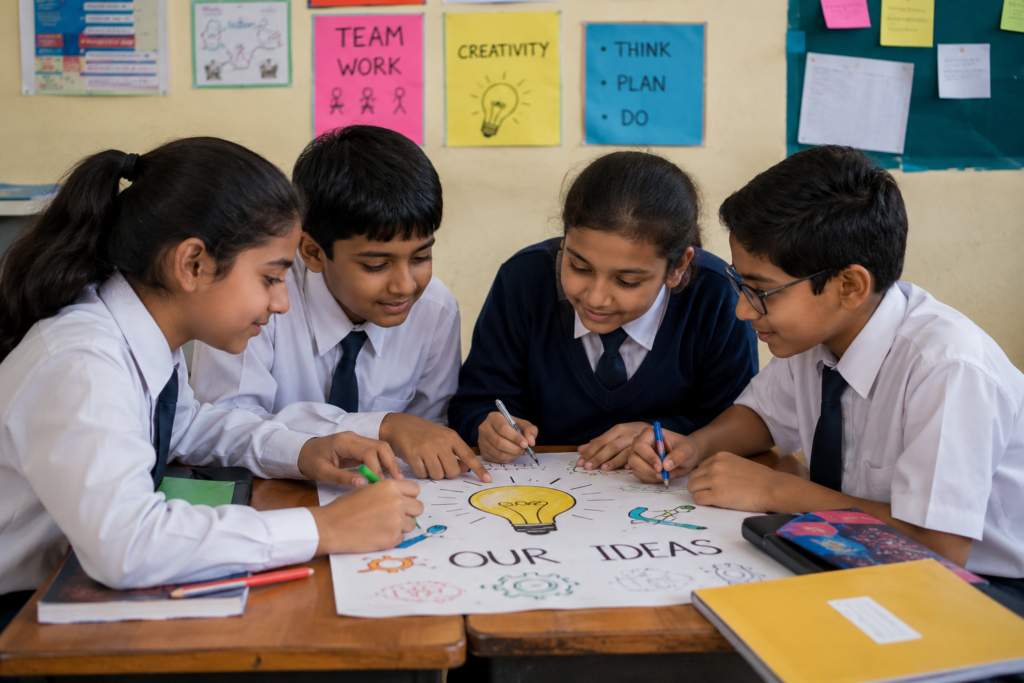
Creative learning can also improve teamwork and communication. Group projects require students to share ideas, listen to others, divide responsibilities, and work toward a common goal.
When students work together, they are exposed to different opinions and approaches. One student may have an idea that another student can improve. This process can lead to better results and teaches students how to cooperate with people who think differently.
These collaboration skills are highly valuable because modern workplaces often depend on teamwork and communication.
Creativity Prepares Students for the Future
The future workplace will continue to change because of technology and innovation. Many jobs will require employees to think creatively, solve new problems, communicate effectively, and adapt to changing situations.
Students who develop creativity during their education can become more prepared for these demands. They learn how to explore possibilities instead of depending only on familiar methods.
Creativity can also encourage entrepreneurship. A student who learns to identify problems and think of new solutions may eventually develop a business idea, product, service, or social project.
How Schools Can Encourage Creativity
Schools can encourage creativity by providing students with opportunities to explore their interests. Classrooms can include project based learning, creative writing, experiments, debates, art activities, technology projects, and problem solving exercises.
Students should also have some freedom to choose topics or methods when completing assignments. Giving students responsibility can make learning more meaningful.
Schools can create creativity clubs, innovation activities, science exhibitions, writing competitions, and technology based projects. These experiences can help students discover talents that may not appear through traditional academic work.
Conclusion
Creativity is an essential part of modern student learning because it helps students think independently, solve problems, communicate ideas, and become more confident learners. It makes education more interesting and connects classroom knowledge with real world experiences.
Modern education should not focus only on what students can remember. It should also focus on what students can create, explain, improve, and discover. By encouraging creativity, teachers and schools can help students develop skills that are useful in education, careers, and everyday life.
The importance of creativity in education will continue to grow as society becomes more dependent on innovation and new ideas. Students who are encouraged to think creatively today can become better problem solvers, stronger communicators, and more adaptable individuals in the future. Creativity is therefore not simply an extra part of education. It is a powerful foundation for meaningful learning and long term student success.