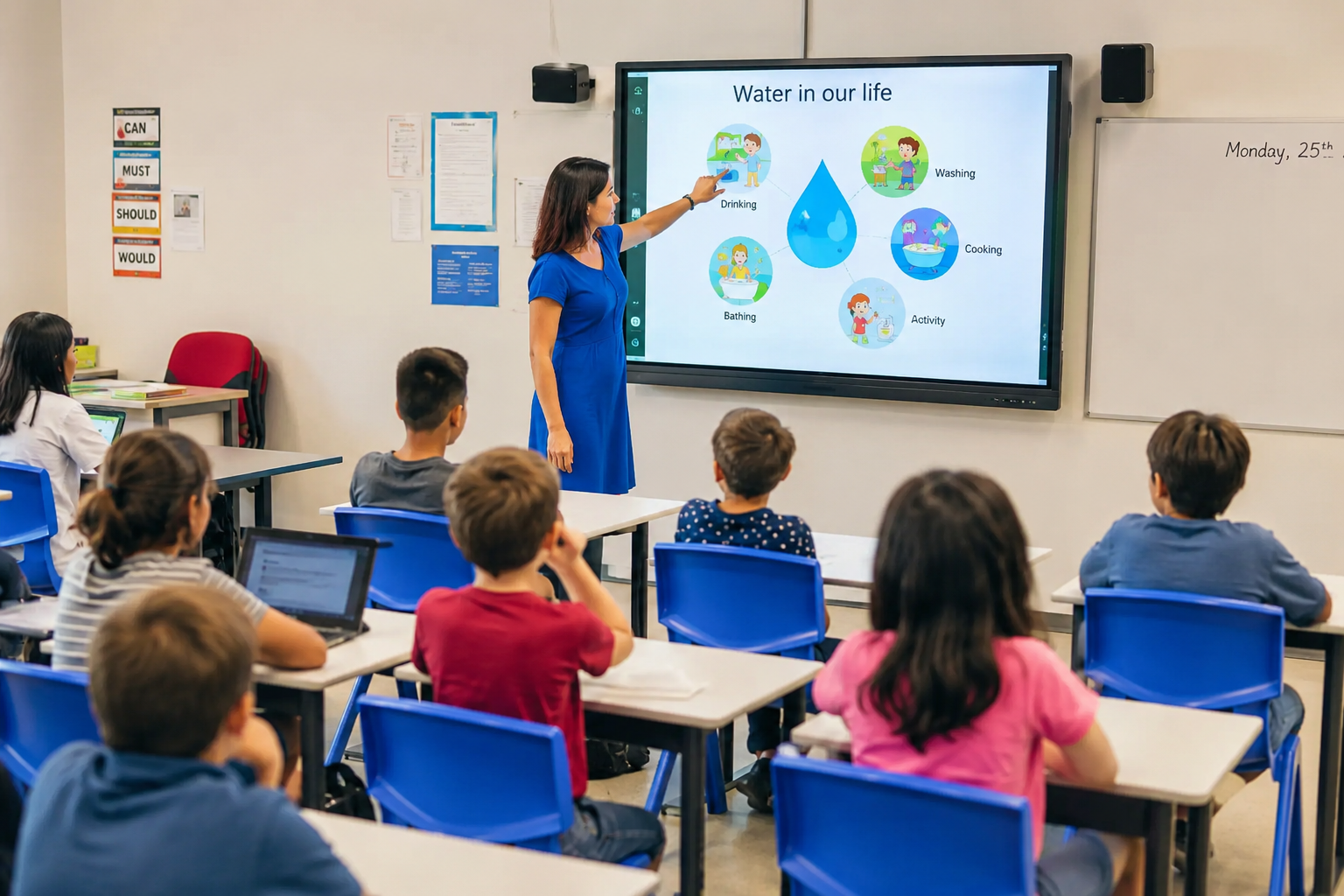
Education is changing quickly because technology has become an important part of everyday life. Traditional classrooms are no longer the only place where students can learn new ideas and develop useful skills. Smart classrooms are becoming popular in schools, colleges, and educational institutions because they combine modern technology with effective teaching methods. A smart classroom uses digital tools such as interactive boards, computers, projectors, educational software, online resources, and digital learning platforms to make education more engaging and effective.
The main goal of a smart classroom is not simply to add technology to the classroom. Its purpose is to improve the learning experience for both students and teachers. When technology is used correctly, students can understand difficult topics more easily, participate actively in lessons, and learn according to their needs. Teachers can also present information in more interesting ways and monitor student progress more effectively.
What Is a Smart Classroom?
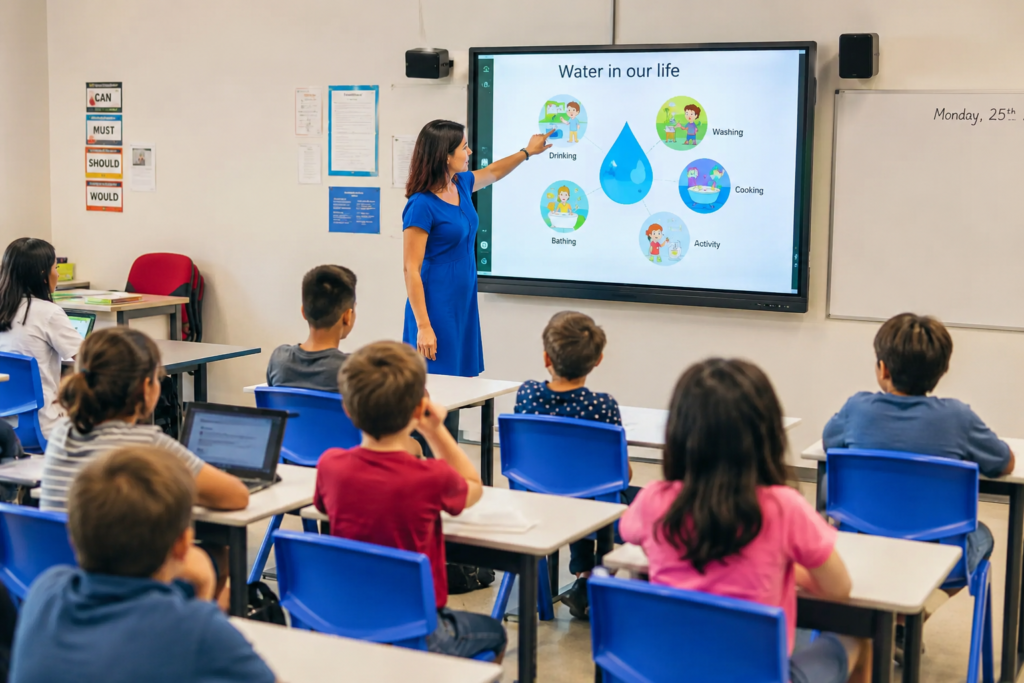
A smart classroom is a modern learning environment that uses digital technology to support teaching and learning. Instead of depending only on textbooks and traditional whiteboards, teachers can use interactive displays, multimedia presentations, videos, educational applications, online materials, and digital assessments.
Smart classrooms can make lessons more visual and interactive. For example, a science teacher can show a video of a scientific experiment, while a geography teacher can use digital maps to explain different locations. Mathematics teachers can use interactive software to demonstrate difficult calculations. These methods can help students understand concepts instead of simply memorizing information.
Makes Learning More Interactive
One of the biggest benefits of smart classrooms is increased student interaction. Traditional teaching can sometimes involve students listening to a teacher for a long period. Although this method can still be useful, students may lose concentration when lessons are not interactive.
Smart classroom technology allows teachers to create activities where students can participate directly. Interactive boards, educational games, quizzes, and digital exercises encourage students to become active participants in the learning process.
When students interact with lessons, they are more likely to remain focused. They can answer questions, solve problems, explore information, and receive immediate feedback. This makes the classroom more active and enjoyable.
Improves Understanding of Difficult Topics
Some subjects can be difficult to understand through written explanations alone. Students may struggle when they cannot visualize an idea or connect it with a real example. Smart classrooms can solve this problem by using videos, animations, diagrams, simulations, and other visual resources.
For example, students learning about the human body can explore digital diagrams that show how organs work. Students studying astronomy can watch simulations of planets moving around the sun. In physics, digital experiments can demonstrate concepts that may be difficult to perform in a traditional classroom.
Visual learning can make complicated information easier to understand. Students can see how a process works instead of only reading about it in a textbook.
Supports Different Learning Needs
Every student learns differently. Some students understand information quickly through reading, while others learn better through images, videos, discussions, or practical activities. Smart classrooms provide teachers with different ways to present the same information.
A teacher can explain a topic using text, images, audio, video, and interactive activities. This flexibility can support students with different learning preferences and abilities.
Digital learning materials can also allow students to review lessons at their own pace. If a student does not understand something during class, they may be able to revisit the material later. This can improve confidence and reduce the pressure students sometimes feel in traditional learning environments.
Encourages Student Participation
Student participation is an important part of successful education. When students actively participate, they have more opportunities to ask questions, share ideas, and practice their knowledge.
Smart classrooms provide many opportunities for participation. Teachers can conduct digital quizzes and polls during lessons. Students can answer questions using classroom devices and receive immediate results. Group activities can also be organized using collaborative digital platforms.
This approach can encourage even quiet students to participate. Some students may feel nervous about answering questions in front of the whole class, but digital activities can provide alternative ways for them to contribute.
Provides Access to More Learning Resources
Traditional classrooms often depend heavily on textbooks and printed materials. Smart classrooms can give students access to a much wider range of educational resources.
Teachers can use online libraries, educational websites, digital books, academic videos, interactive courses, and other learning materials. This allows students to explore topics beyond the information provided in a single textbook.
Access to different resources can also encourage independent learning. Students can research questions, explore additional information, and develop the habit of learning outside the classroom.
Makes Teaching More Effective
Smart classrooms do not only benefit students. Teachers can also improve their teaching methods through technology. Digital tools can help teachers organize lessons, prepare presentations, create assessments, and track student performance.
Teachers can use digital platforms to identify areas where students are struggling. For example, if many students perform poorly on a particular quiz question, the teacher can recognize that the topic needs additional explanation.
Technology can also save time. Digital assignments can sometimes be collected and organized automatically, allowing teachers to spend more time helping students and planning effective lessons.
Provides Immediate Feedback
Feedback is essential for learning because students need to know what they understand and where they need improvement. In a traditional classroom, students may have to wait until an assignment is checked before receiving feedback.
Smart classroom tools can provide immediate results for quizzes, exercises, and interactive activities. Students can quickly identify mistakes and learn from them.
Immediate feedback can also help teachers understand the progress of the entire class. Instead of waiting for a major examination, teachers can identify learning difficulties during the lesson and provide additional support.
Encourages Collaboration
Smart classrooms can make collaboration easier. Students can work together on digital projects, presentations, research activities, and problem solving exercises.
Collaborative learning helps students develop communication and teamwork skills. They learn how to share ideas, listen to others, divide responsibilities, and work toward a common goal.
These skills are important beyond school. Modern workplaces often require employees to communicate and collaborate using digital tools. Therefore, smart classrooms can help students prepare for future academic and professional environments.
Makes Learning More Flexible
Another important advantage of smart classrooms is flexibility. Learning does not always have to stop when students leave the classroom. Digital platforms can allow students to access educational materials from home or other locations.
This can be especially useful when students miss a class. They may be able to review presentations, recorded lessons, assignments, or other resources later.
Flexible learning can also support students who need additional time to understand a topic. Instead of depending entirely on the pace of the classroom, students may have opportunities to review material according to their individual needs.
Builds Digital Skills
Technology is now an important part of almost every career. Students need more than traditional academic knowledge. They also need digital literacy and the ability to use technology responsibly.
Smart classrooms give students regular opportunities to use digital tools for research, communication, presentations, assignments, and collaboration. These experiences can help students become more comfortable with technology.
Learning how to evaluate online information is also important. Students can develop research skills and learn to distinguish reliable information from unreliable sources.
Creates a More Engaging Learning Environment
Student attention is an important challenge in education. Long lectures and repetitive activities can sometimes make students lose interest. Smart classrooms can introduce different types of content that make lessons more engaging.
Videos, animations, interactive questions, digital games, simulations, and presentations can create variety in classroom activities. When lessons are interesting, students may be more motivated to participate and learn.
However, technology should support good teaching rather than replace it. Teachers still play an important role in explaining ideas, encouraging students, answering questions, and creating a positive learning environment.
Challenges of Smart Classrooms
Although smart classrooms offer many benefits, they also have some challenges. Schools need proper equipment, reliable internet access, technical support, and trained teachers. Technology can become less effective when devices do not work properly or teachers do not know how to use them.
There is also a risk that students may become distracted by technology. For this reason, schools should create clear rules for responsible technology use.
Teacher training is especially important. Simply installing smart boards and computers does not automatically create better education. Teachers need training that shows them how to use technology effectively as part of their teaching strategies.
Conclusion
Smart classrooms are changing the learning experience by making education more interactive, flexible, visual, and engaging. They give students access to more learning resources and provide teachers with useful tools for presenting information and tracking progress.
The benefits of smart classroom technology become stronger when technology is combined with effective teaching methods. Students can develop better understanding, stronger digital skills, improved collaboration, and greater confidence in learning.
The future of education will likely include even more technology, but the role of teachers will remain extremely important. A successful smart classroom is not simply a room filled with computers and digital screens. It is a learning environment where technology is used thoughtfully to help students understand ideas, participate actively, and prepare for the future.
As schools continue to adopt modern educational technology, smart classrooms can play an important role in creating better learning opportunities for students and more effective teaching experiences for educators.