Modern education is changing the way students learn and prepare for their professional lives. In the past, education mainly focused on textbooks, memorization, examinations, and completing academic courses. Today, students need much more than academic knowledge to succeed in a competitive workplace. They need communication skills, creativity, problem solving abilities, digital knowledge, teamwork, confidence, and the ability to learn new things throughout their lives. This is why modern education plays an important role in preparing students for future careers.
The world of work is changing quickly because of technology, artificial intelligence, globalization, and new business models. Many jobs that will exist in the future may look very different from traditional jobs. Modern education helps students understand these changes and develop skills that can help them adapt. By using practical learning methods, technology, career guidance, teamwork, and creative activities, schools and colleges can prepare students for professional success.
Development of Practical Skills
One of the most important ways modern education prepares students for future careers is by focusing on practical skills. Students are encouraged to apply what they learn in real life instead of only remembering information for examinations. Practical activities, assignments, experiments, presentations, and projects allow students to understand how knowledge can be used in professional situations.
For example, a business student may create a simple business plan, while a computer student may develop a website or application. These activities give students experience with real tasks and help them become more confident. Practical learning also teaches students how to handle challenges and find solutions when things do not go as planned.
Improvement of Communication Skills
Good communication is necessary in almost every career. Modern education gives students many opportunities to improve their speaking, writing, listening, and presentation skills. Classroom discussions, group presentations, debates, interviews, and written assignments help students express their ideas clearly.
Strong communication skills can help students during job interviews and professional meetings. They can also help employees communicate with customers, managers, colleagues, and business partners. A student who knows how to communicate effectively can often work more confidently and build stronger professional relationships.
Building Digital Skills
Technology has become an important part of almost every workplace. Modern education introduces students to computers, online platforms, digital tools, educational software, and other technologies. Students learn how to search for information, create digital content, use online communication tools, and complete tasks with technology.
Digital skills are especially important because many modern careers depend on technology. Even professions that were traditionally less connected to computers now use digital systems. By developing digital literacy at an early stage, modern education helps students become more comfortable with workplace technology.
Encouraging Critical Thinking
Future careers will require people who can think carefully and make good decisions. Modern education encourages critical thinking instead of asking students to accept every piece of information without questioning it. Students learn how to analyze information, compare different ideas, identify problems, and develop logical solutions.
Critical thinking can be useful in many professional situations. An employee may need to understand customer feedback, analyze business information, solve a technical problem, or make an important decision. Students who develop critical thinking skills are better prepared to handle these responsibilities.
Promoting Creativity and Innovation
Creativity is another important skill for future careers. Businesses and organizations need people who can develop new ideas, improve existing products, and find different ways to solve problems. Modern education gives students opportunities to be creative through art, writing, projects, technology, research, and problem solving activities.
Creative learning allows students to think beyond traditional answers. It teaches them that a problem can sometimes have several possible solutions. This way of thinking can become valuable in careers related to business, technology, marketing, design, education, engineering, media, and many other fields.
Teaching Teamwork and Collaboration
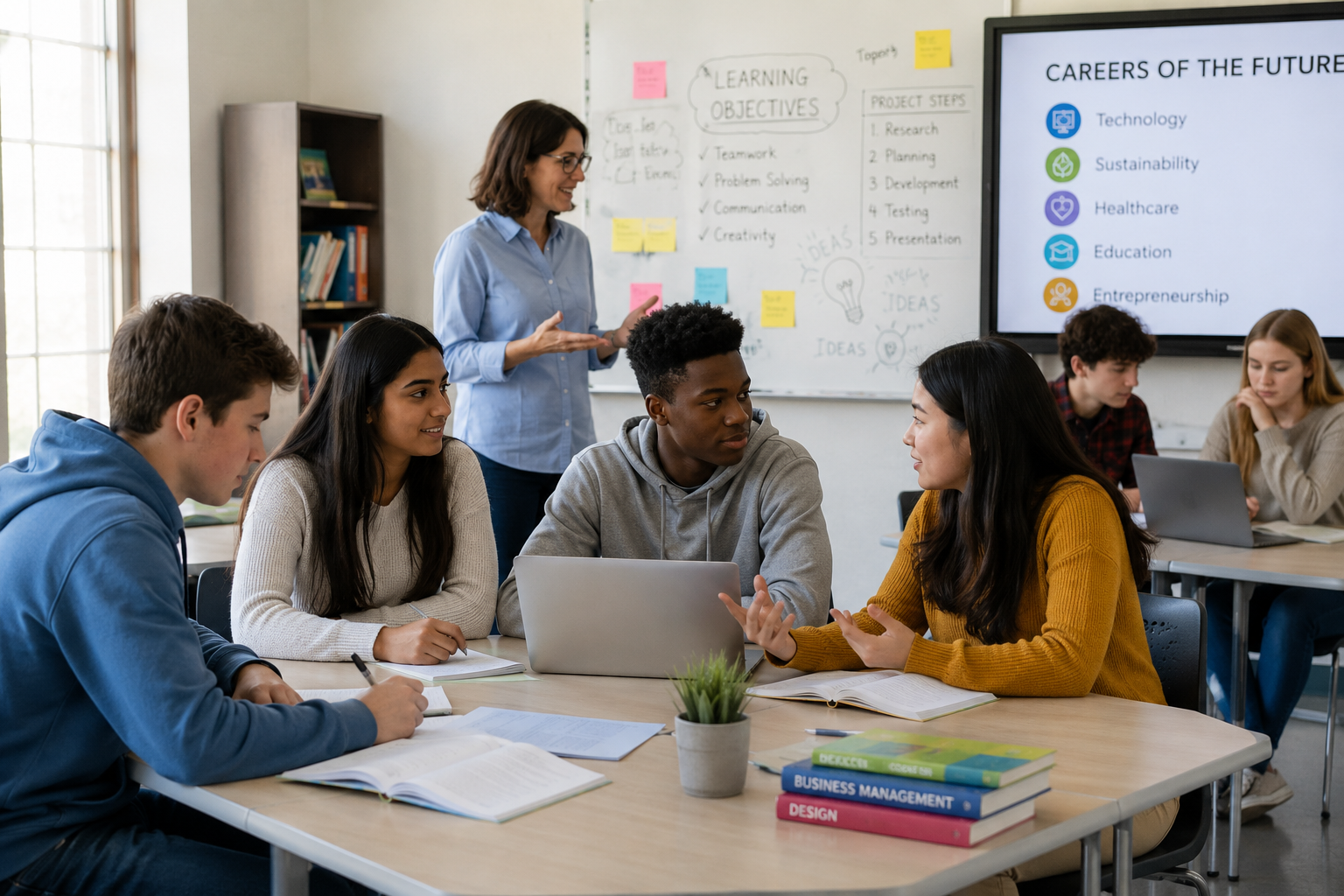
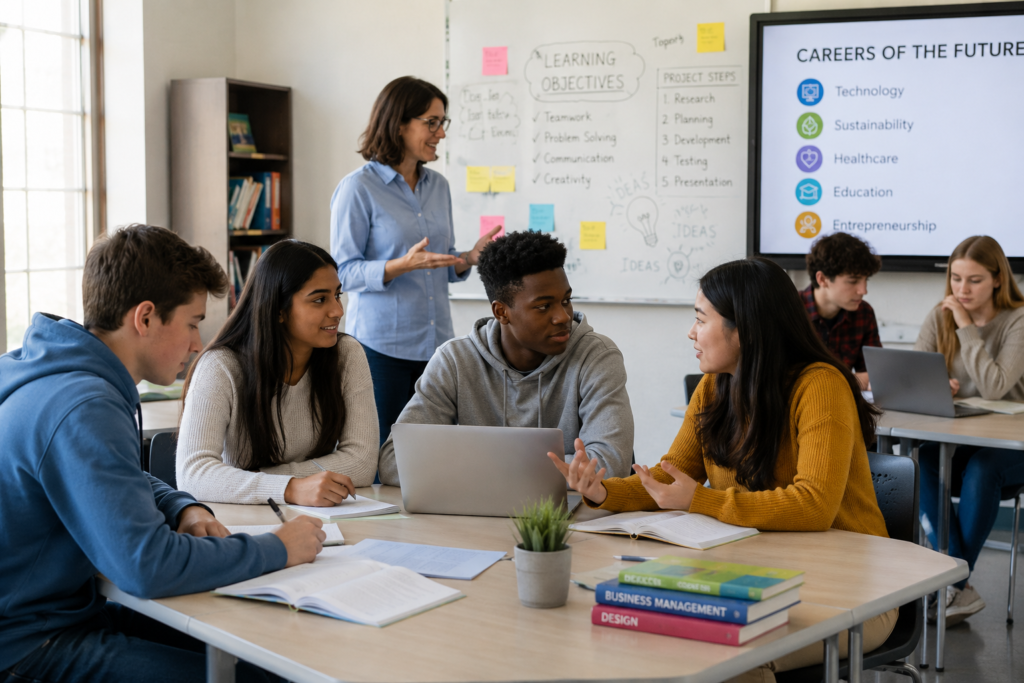
Most modern workplaces require employees to work with other people. Students therefore need to understand how to cooperate, share responsibilities, listen to others, and work toward common goals. Modern education develops teamwork through group projects, classroom activities, research assignments, and collaborative tasks.
Working in a team also teaches students how to manage different opinions. They learn that people may have different ideas and working styles. Learning to respect these differences helps students become better team members and future professionals.
Developing Problem Solving Abilities
Every career has challenges. Modern education prepares students by teaching them how to identify problems and find suitable solutions. Instead of giving students answers immediately, teachers often encourage them to explore possible solutions themselves.
Project based learning is a useful example. Students may receive a problem and then work through different stages to solve it. During this process, they learn how to collect information, evaluate choices, make decisions, and improve their work. These abilities can later help them deal with workplace challenges.
Providing Career Awareness
Career education helps students understand different professions and make informed decisions about their futures. Modern schools and colleges can introduce students to various career paths through counseling, workshops, guest speakers, internships, career fairs, and practical activities.
Career awareness is important because students may not always know what opportunities are available to them. By learning about different industries and professions, students can identify their interests and strengths. This can help them choose educational programs that match their future career goals.
Preparing Students for Remote Work
Remote and flexible work have become important parts of the modern employment environment. Modern education can prepare students for this type of work by using online classrooms, digital communication, virtual meetings, cloud based tools, and online collaboration platforms.
Students who regularly complete assignments online can learn how to manage digital communication and organize their work independently. These experiences can prepare them for professional environments where employees may work from different locations.
Developing Time Management Skills
Successful professionals need to manage their time effectively. Modern education helps students develop time management skills by giving them assignments, projects, examinations, presentations, and deadlines. Students learn how to organize their responsibilities and complete work on time.
Time management also teaches students about priorities. When several tasks need attention, students must decide which tasks are more important and how much time they should spend on each one. This habit can become very useful when they enter professional life.
Building Confidence and Independence
Modern education encourages students to become independent learners. Instead of depending completely on teachers, students are encouraged to research information, ask questions, explore subjects, and take responsibility for their learning.
This independence can increase confidence. Students begin to understand that they can learn new skills and overcome difficult tasks through effort and practice. In future careers, this confidence can help them accept new responsibilities and adapt to changing workplace expectations.
Encouraging Lifelong Learning
The professional world is constantly changing. New technologies, tools, and methods can appear within a short period of time. A skill that is valuable today may require improvement tomorrow. Modern education therefore teaches students that learning does not end when they finish school or university.
Students are encouraged to continue learning through online courses, professional training, reading, research, workshops, and personal development. Lifelong learning helps professionals remain competitive and adapt to new career opportunities.
Teaching Adaptability
Adaptability is one of the most valuable qualities for future employees. Modern education prepares students to handle change by exposing them to different learning methods, technologies, subjects, and experiences. Students learn that they may need to change their approach when circumstances change.
In a workplace, employees may receive new responsibilities, work with different teams, learn new software, or adjust to new company policies. Students who have developed adaptability through modern education can handle these changes more comfortably.
Connecting Education With Real World Experience
Internships, volunteer activities, career projects, field visits, and workplace training can connect education with real professional experience. These opportunities allow students to understand how organizations operate and what employers expect from workers.
Real world experience can also help students discover their interests. A student may think they want a particular career but discover through practical experience that another field suits them better. This understanding can help students make better career decisions.
Conclusion
Modern education plays a major role in preparing students for future careers. It does more than provide academic knowledge. It develops practical skills, communication abilities, digital literacy, critical thinking, creativity, teamwork, problem solving, time management, confidence, and adaptability. These skills can help students face the challenges of a changing professional world.
The future workplace will continue to change as technology and new industries develop. Students who learn how to adapt, communicate, collaborate, solve problems, and continue learning will have a stronger foundation for professional success. Modern education gives students the opportunity to develop these qualities before they enter the workforce.
By connecting classroom learning with practical experiences and real world challenges, modern education can help students become capable and responsible professionals. It prepares them not only for their first job but also for continuous growth throughout their careers. This is why modern education is an important foundation for building successful future careers.