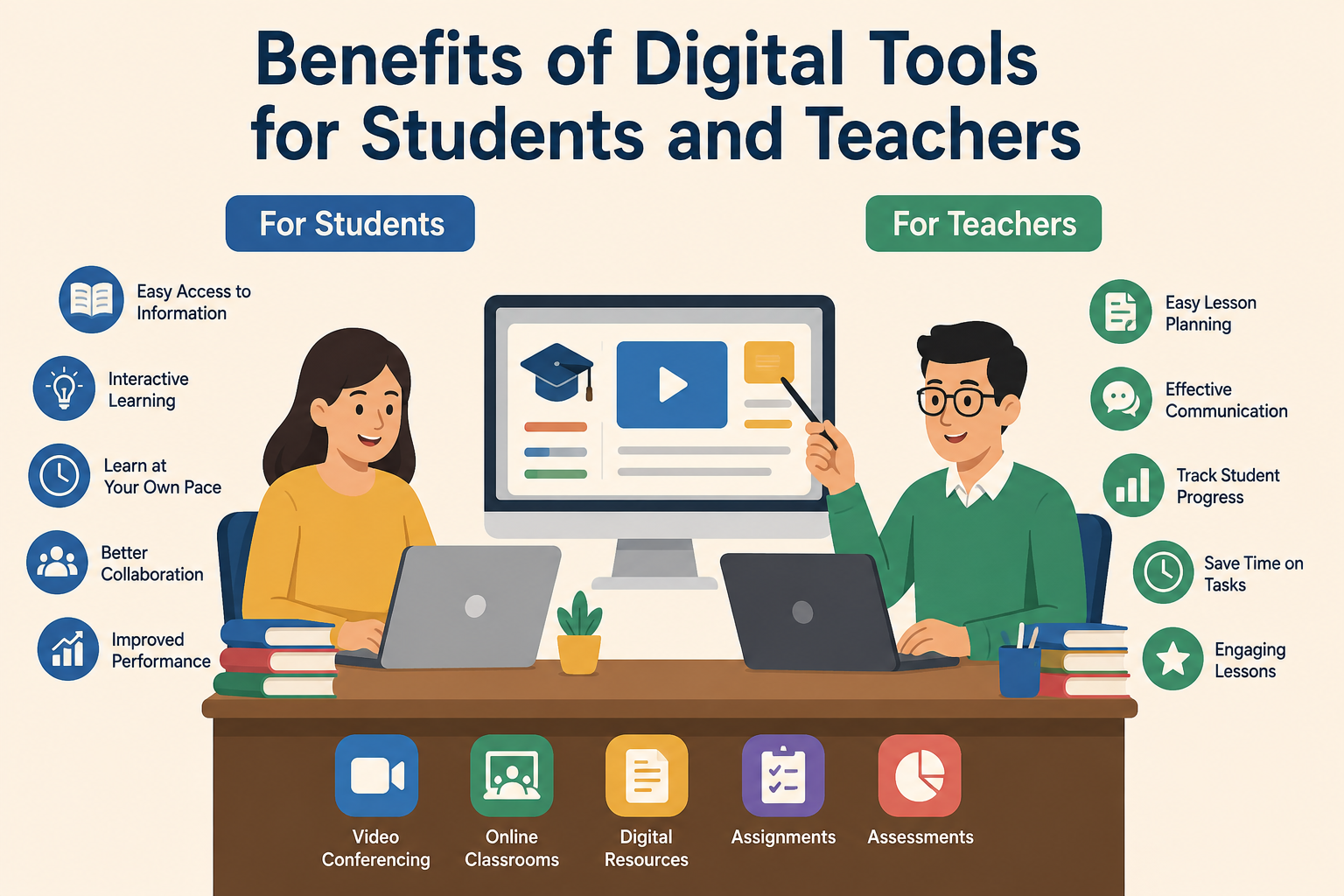
Digital tools have become an important part of modern education. Schools, colleges, universities, and training centers are using technology to make teaching and learning easier, faster, and more effective. From online learning platforms to educational apps, digital classrooms, smart boards, and interactive learning resources, technology has changed the way students learn and teachers teach. The benefits of digital tools for students and teachers can be seen in better communication, improved learning experiences, easy access to information, and more flexible education.
In the past, students mainly depended on textbooks, classroom lectures, and handwritten notes. Today, they can use computers, tablets, smartphones, educational websites, online libraries, videos, and learning applications to understand different subjects. Teachers can also use digital tools to prepare lessons, communicate with students, create activities, check assignments, and monitor academic progress. This makes digital education a valuable part of modern learning.
Easy Access to Educational Resources
One of the biggest benefits of digital tools for students is easy access to educational resources. Students no longer have to depend only on the books available in their school or library. They can search for information online and find articles, videos, tutorials, research papers, digital books, and practice exercises.
This access allows students to explore topics beyond their regular classroom lessons. If a student does not understand a particular concept, they can find another explanation through an educational video or interactive lesson. This makes learning more flexible and helps students study according to their own needs.
Teachers also benefit from this wide range of resources. They can find lesson ideas, educational videos, presentations, quizzes, worksheets, and other teaching materials. Digital resources can save teachers time and help them create more interesting lessons.
Better Communication Between Teachers and Students
Digital tools have made communication between teachers and students much easier. Teachers can share announcements, assignments, study materials, and important information through online learning platforms and communication applications.
Students can ask questions even when they are not physically present in the classroom. Teachers can respond to questions, provide feedback, and guide students through digital platforms. This creates better communication and helps students stay connected with their teachers.
Parents can also benefit from digital communication because schools can share academic updates, attendance information, and important announcements electronically. As a result, digital tools can create stronger communication between students, teachers, schools, and families.
Interactive Learning Experience
Traditional classroom teaching can sometimes become less interesting when students only listen to lectures and read textbooks. Digital tools can make learning more interactive. Students can watch educational videos, complete online quizzes, use simulations, participate in virtual activities, and explore digital presentations.
Interactive learning encourages students to participate instead of simply receiving information. For example, a science lesson can include a virtual experiment that allows students to understand a difficult concept through visual experience. Similarly, language students can use educational applications to practice vocabulary, pronunciation, and grammar.
Interactive digital learning can make lessons more enjoyable and help students remember information for a longer time.
Personalized Learning for Students
Every student learns differently. Some students understand a topic quickly, while others need additional explanations and practice. Digital tools can support personalized learning by allowing students to learn at their own pace.
Online learning platforms can provide different levels of exercises and learning materials. Students can repeat lessons, practice difficult topics, and move forward when they feel ready. This can increase confidence and reduce the pressure that some students experience in traditional classrooms.
Teachers can also use digital learning data to understand which students need additional support. This allows teachers to provide more focused assistance instead of using exactly the same approach for every student.
Improved Productivity for Teachers
Digital tools can reduce the amount of time teachers spend on repetitive tasks. Teachers can use software to create presentations, organize lessons, prepare quizzes, collect assignments, and record grades.
Online assessment tools can also make it easier to check certain types of assignments. Teachers can quickly identify common mistakes and provide feedback to students. This gives teachers more time to focus on teaching, classroom interaction, and individual student support.
Digital calendars and classroom management platforms can also help teachers organize their schedules and educational activities more efficiently.
Development of Digital Skills
Another important benefit of digital tools for students and teachers is the development of digital skills. Technology is now used in almost every professional field, so students need to understand how to use digital tools responsibly and effectively.
Students can learn how to search for reliable information, create digital presentations, communicate online, use educational software, and work with digital documents. These skills can help them in higher education and future employment.
Teachers also need digital skills to provide effective modern education. Learning how to use online platforms, presentation software, digital assessment tools, and educational applications can improve their teaching abilities.
More Flexible Learning Opportunities
Digital tools make education more flexible. Students can access learning materials from home, school, libraries, or other suitable locations. This is particularly useful for students who cannot always attend physical classes.
Online courses allow learners to study at convenient times. Recorded lectures can be watched again when necessary, while digital notes and resources can be accessed whenever students need them.
Teachers can also provide learning materials online so students can continue studying outside the classroom. This creates a learning environment that is not limited to a specific place or time.
Encourages Collaboration
Digital technology can encourage students to work together. Students can collaborate on presentations, research projects, documents, and group assignments using online platforms.
This type of collaboration helps students develop communication, teamwork, problem solving, and leadership skills. They can share ideas, discuss different opinions, and complete projects together.
Teachers can also collaborate with other educators by sharing lesson plans, educational resources, and teaching strategies. This can help teachers learn from each other and improve their classroom practices.
Quick Feedback and Assessment
Feedback is an important part of education because students need to know their strengths and weaknesses. Digital tools can provide quick feedback through online quizzes, assignments, and learning platforms.
When students receive immediate feedback, they can identify mistakes and correct them before moving to more advanced topics. Teachers can also use assessment data to understand student performance.
Digital assessment tools can show which questions students find difficult and which areas require additional teaching. This makes the learning process more organized and effective.
Supports Creative Learning
Digital tools give students many opportunities to express creativity. They can create presentations, videos, digital artwork, podcasts, websites, and other projects.
Instead of simply writing answers in notebooks, students can present their knowledge in different formats. This can make education more engaging and help students discover their creative abilities.
Teachers can also use creative digital activities to make lessons more attractive. A well designed presentation, educational video, or interactive activity can help students become more interested in a subject.
Cost and Resource Efficiency
Digital tools can also reduce the need for large amounts of printed educational material. Schools can share notes, assignments, announcements, and study resources digitally.
Although technology requires investment in devices, software, and internet access, digital resources can become more economical over time. A single digital resource can be shared with many students without printing multiple copies.
This can help educational institutions manage resources more efficiently while also reducing unnecessary paper use.
Challenges of Using Digital Tools
Despite their many benefits, digital tools also come with challenges. Not every student has equal access to computers, smartphones, or reliable internet connections. Excessive screen time can also become a concern if technology is not used properly.
Teachers need proper training to use digital tools effectively. Students also need guidance about online safety, privacy, responsible technology use, and reliable information.
For this reason, digital tools should support good teaching rather than completely replace teachers. Technology works best when teachers use it carefully and combine it with meaningful classroom interaction.
Conclusion
The benefits of digital tools for students and teachers are clear in modern education. Digital technology provides easy access to educational resources, improves communication, supports personalized learning, encourages collaboration, and makes lessons more interactive. It also helps teachers save time, organize their work, assess students, and provide better feedback.
When used responsibly, digital tools can create a more flexible, engaging, and effective learning environment. Students can develop important digital skills while teachers can use technology to improve their teaching methods. The future of education will continue to involve technology, but the most successful approach will be one that combines digital tools with effective teaching, human communication, creativity, and proper guidance.