Modern education is changing quickly because technology, communication, and the needs of the workplace are changing every day. Students are no longer expected to only remember information from textbooks. They also need to understand how to use information, solve problems, communicate with others, and adapt to new situations. This is why developing important skills for students has become an essential part of modern education.
Schools and teachers have an important role in helping students develop academic knowledge as well as practical skills. These skills can help students perform better in their studies, prepare for future careers, and become confident individuals. From critical thinking and communication to digital literacy and creativity, students need a wide range of abilities to succeed in the modern world.
Critical Thinking Skills
Critical thinking is one of the most important skills students need in modern education. Students receive a huge amount of information from books, websites, social media, videos, and other sources. They need to know how to understand this information and decide whether it is useful and reliable.
Critical thinking helps students ask questions, examine facts, compare different ideas, and make logical decisions. Instead of simply accepting information, students learn to think about why something is true and how it can be supported by evidence. This skill is useful in education as well as everyday life.
Teachers can develop critical thinking by asking students open questions, encouraging discussions, and giving them real life problems to solve. When students learn to think independently, they become more confident learners.
Communication Skills
Good communication skills are essential for students because they need to share ideas clearly with teachers, classmates, employers, and other people. Communication includes speaking, writing, listening, and understanding others.
Students with strong communication skills can explain their ideas more effectively and participate confidently in classroom discussions. These skills are also important for future professional life because almost every career requires employees to communicate with others.
Modern education should provide students with opportunities to give presentations, participate in group discussions, write reports, and work on speaking activities. Learning how to listen carefully is equally important because effective communication is not only about speaking.
Digital Literacy
Technology has become an important part of education and professional life. Digital literacy is therefore one of the most important skills students need today. Students should know how to use computers, educational platforms, online resources, productivity tools, and digital communication systems.
Digital literacy also means understanding online safety and responsible technology use. Students should know how to protect personal information, recognize unreliable websites, and communicate respectfully online.
Technology can make learning easier by providing access to online courses, digital books, educational videos, and interactive learning tools. However, students need the right digital skills to use these resources effectively.
Problem Solving Skills
Problem solving is another important skill for students in modern education. Students will face different challenges during their education, careers, and personal lives. Learning how to identify problems and find practical solutions can prepare them for these situations.
Problem solving encourages students to understand a situation, identify possible solutions, evaluate different choices, and select the most suitable option. This process can be developed through projects, classroom activities, experiments, and real life examples.
Students who develop strong problem solving skills are often better prepared to handle unexpected challenges. They learn that a difficult problem can be approached step by step instead of being avoided.
Creativity
Creativity is not limited to art and writing. It is useful in science, business, technology, education, engineering, and many other fields. Modern workplaces often need people who can create new ideas and find different ways to complete tasks.
Creative students are willing to explore new possibilities and think beyond traditional answers. Schools can support creativity by allowing students to work on projects, create presentations, develop ideas, and experiment with different solutions.
When students are given freedom to express their ideas, they can become more confident and innovative. Creativity can also make learning more interesting and enjoyable.
Collaboration and Teamwork
Students need to know how to work effectively with other people. Collaboration and teamwork are important skills because many academic and professional tasks require people to work together.
Group projects can teach students how to share responsibilities, listen to different opinions, solve disagreements, and work toward a common goal. These experiences also help students understand that every person can bring different strengths to a team.
Teamwork prepares students for modern workplaces where employees often work with colleagues from different backgrounds and areas of expertise. Learning how to cooperate with others can make students more successful in both education and professional life.
Time Management
Time management is another valuable skill that students need to develop. Students often have assignments, examinations, projects, extracurricular activities, and personal responsibilities. Without proper planning, it can become difficult to complete everything on time.
Time management teaches students how to organize their daily activities and set priorities. Students can use schedules, calendars, task lists, and other planning methods to manage their responsibilities.
Good time management can also reduce unnecessary stress and help students maintain a better balance between study and personal activities. When students learn to manage their time early, this skill can benefit them throughout their careers.
Adaptability
The modern world changes very quickly. New technologies, careers, tools, and working methods continue to appear. Students therefore need to become adaptable and comfortable with learning new things.
Adaptability means being able to adjust when circumstances change. A student may need to learn a new software program, study through a different learning platform, work with new classmates, or understand a new subject. Instead of being afraid of change, adaptable students learn how to respond positively.
Education should encourage students to view change as an opportunity to learn. This mindset can help them remain prepared for future challenges.
Emotional Intelligence
Academic knowledge is important, but students also need to understand emotions and relationships. Emotional intelligence helps students recognize their own feelings and understand the feelings of others.
Students with emotional intelligence can manage their emotions, show empathy, build healthy relationships, and respond to difficult situations more effectively. These abilities can improve classroom behavior and teamwork.
Teachers can support emotional intelligence by encouraging respectful communication, cooperation, self reflection, and positive classroom relationships. These skills can help students become more responsible and understanding individuals.
Research Skills
Students have access to more information than ever before. However, finding information is not enough. Students need to know how to search for reliable information, compare sources, organize facts, and use information correctly.
Research skills are especially important for assignments, projects, and higher education. Students should learn how to identify trustworthy sources and avoid depending on inaccurate information.
Strong research skills can also support independent learning. Students become more capable of finding answers themselves instead of always depending on teachers or classmates.
Leadership Skills
Leadership is another valuable skill students can develop through modern education. Leadership does not always mean being in charge of a group. It can also mean taking responsibility, helping others, making decisions, and showing initiative.
Students can develop leadership through group projects, school activities, presentations, clubs, and community activities. These experiences can improve confidence and decision making abilities.
Leadership skills can be useful in almost every career. Employers often value people who can take responsibility and contribute positively to a team.
Conclusion
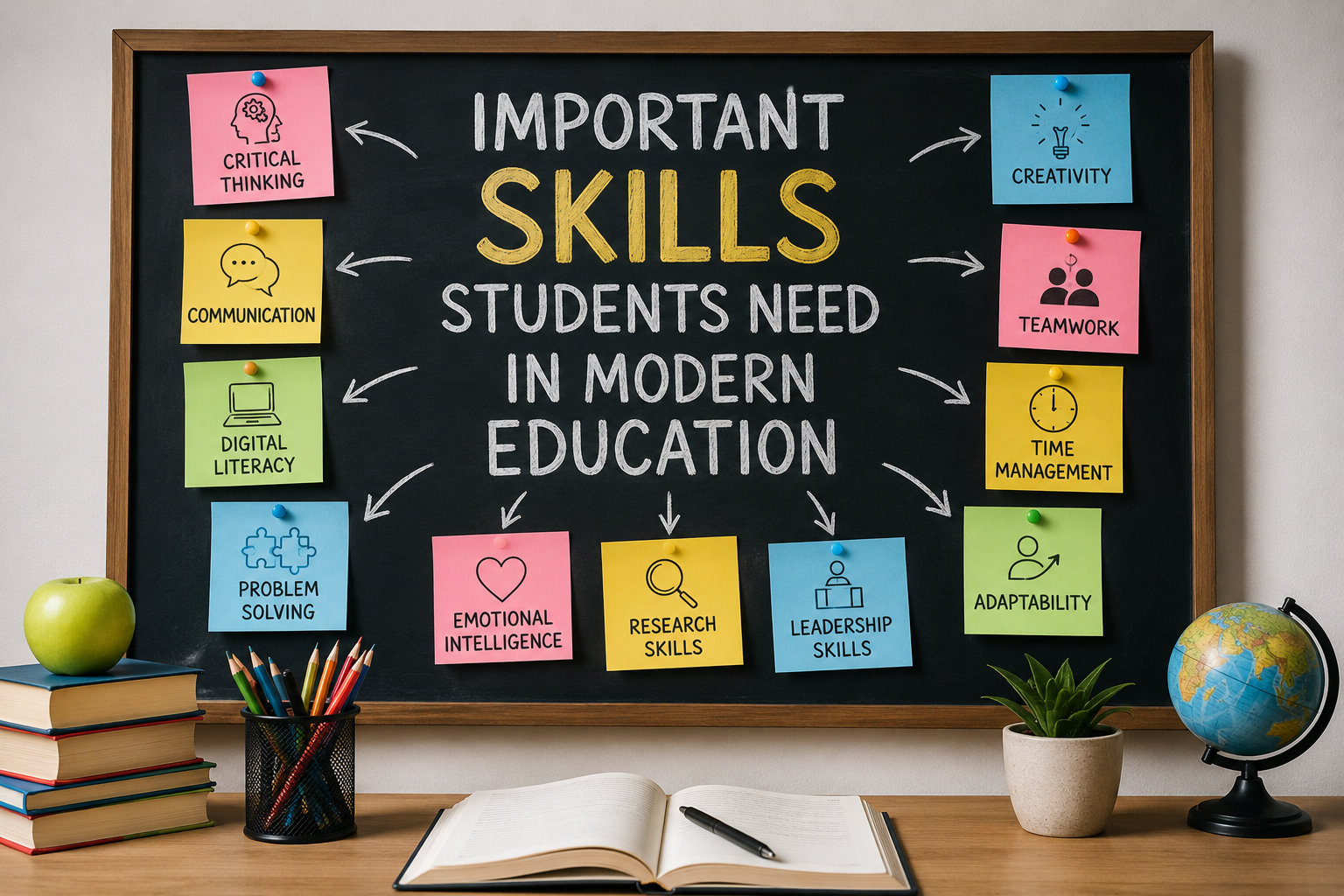
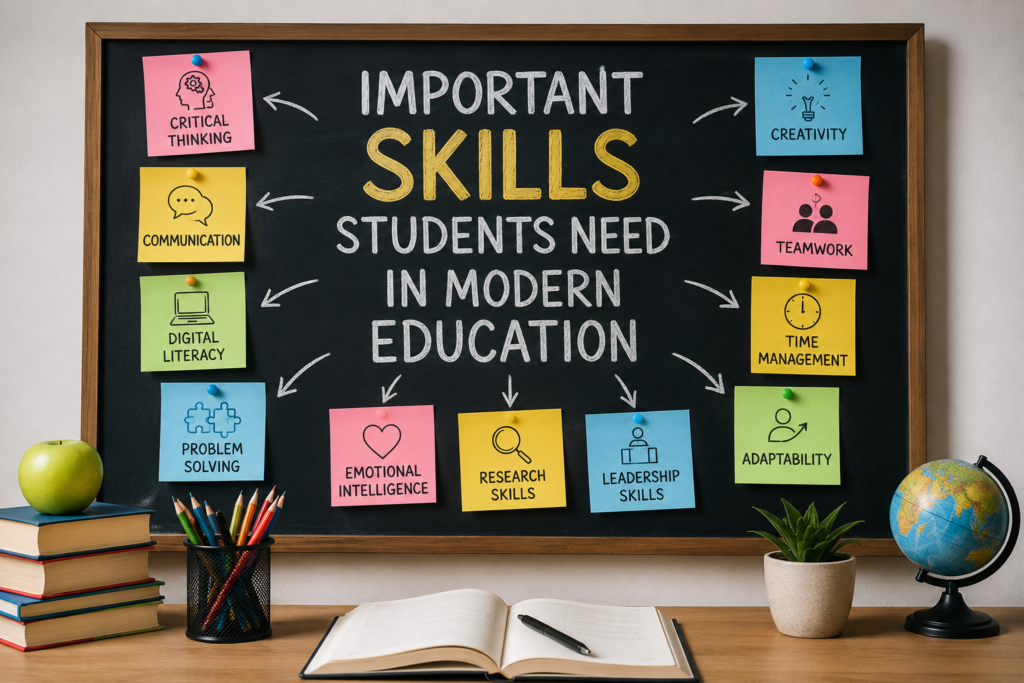
Modern education should focus on more than academic grades. Students need a combination of knowledge, practical abilities, and personal skills to succeed in a changing world. Critical thinking, communication, digital literacy, problem solving, creativity, teamwork, time management, adaptability, emotional intelligence, research skills, and leadership are among the most important skills students need today.
Developing these skills can help students become independent learners and confident individuals. These abilities can also prepare them for higher education, future careers, and everyday challenges. When schools create learning environments that encourage both knowledge and practical skills, students become better prepared for the demands of modern life.
The goal of modern education should therefore be to help students learn how to think, communicate, create, cooperate, and adapt. These important skills for students can provide a strong foundation for lifelong learning and future success.