
Education is changing quickly because technology has become an important part of everyday life. Students are no longer limited to textbooks, classroom lectures, and traditional teaching methods. They can now use computers, smartphones, online courses, digital libraries, educational applications, and artificial intelligence to improve their learning. The future of education in a digital world will bring many new opportunities for students and teachers. It will also change the way people study, communicate, complete assignments, and develop skills for their careers.
The future of education is not only about using more technology. It is about creating better learning experiences where students can learn according to their needs, interests, and abilities. Digital education can make learning more flexible, interactive, accessible, and personalized. However, schools and teachers will need to use technology carefully so that students continue to develop communication skills, creativity, critical thinking, and human values.
The Growing Importance of Digital Education
Digital education is becoming more important because students can access information from almost anywhere. In the past, students often depended on teachers and printed books for most of their educational needs. Today, a student can search for information, watch educational videos, attend an online class, practice a skill, and communicate with teachers through digital platforms.
This change makes education more flexible. Students who cannot attend a physical classroom can continue their studies through online learning. Digital platforms can also help students review difficult lessons several times. This makes the learning process more convenient and suitable for different types of learners.
The future of education will likely combine traditional classroom teaching with digital learning. Physical classrooms will remain important, but technology will support teachers and students in many new ways.
Personalized Learning Through Technology
One of the biggest advantages of digital education is personalized learning. Every student learns differently. Some students understand a topic quickly, while others need more explanation and practice. Traditional classrooms can make it difficult for teachers to give individual attention to every student.
Digital learning tools can help solve this problem. Educational platforms can provide different exercises based on a student’s performance. Students can receive additional practice when they have difficulty with a topic. They can also move forward when they understand a lesson well.
Artificial intelligence can make personalized learning even more useful. AI powered educational systems can analyze learning progress and suggest suitable lessons, activities, and resources. This can help students focus on their weaknesses while continuing to improve their strengths.
The Role of Artificial Intelligence in Education
Artificial intelligence will have an important role in the future of education. AI can support teachers by helping them prepare lessons, organize information, create practice questions, and understand student performance.
For students, AI can provide quick explanations and learning support. A student who does not understand a mathematical concept, for example, may use an AI learning tool to receive another explanation or practice similar questions.
However, AI should support education rather than replace teachers. Teachers provide human understanding, encouragement, emotional support, and guidance that technology cannot completely provide. The best future education system will use AI as a helpful tool while keeping teachers at the center of the learning experience.
Online Learning and Virtual Classrooms
Online learning has already changed education, and its importance will continue to grow. Students can attend virtual classrooms from different locations and communicate with teachers through video meetings, discussion platforms, and digital learning systems.
Online education can also give students access to courses from institutions and teachers outside their local area. This creates more educational opportunities for people who may not have access to certain subjects or specialized teachers.
Virtual classrooms can include videos, presentations, online quizzes, digital assignments, and interactive activities. As internet access improves, online learning may become an even more important part of modern education.
Smart Classrooms and Interactive Learning
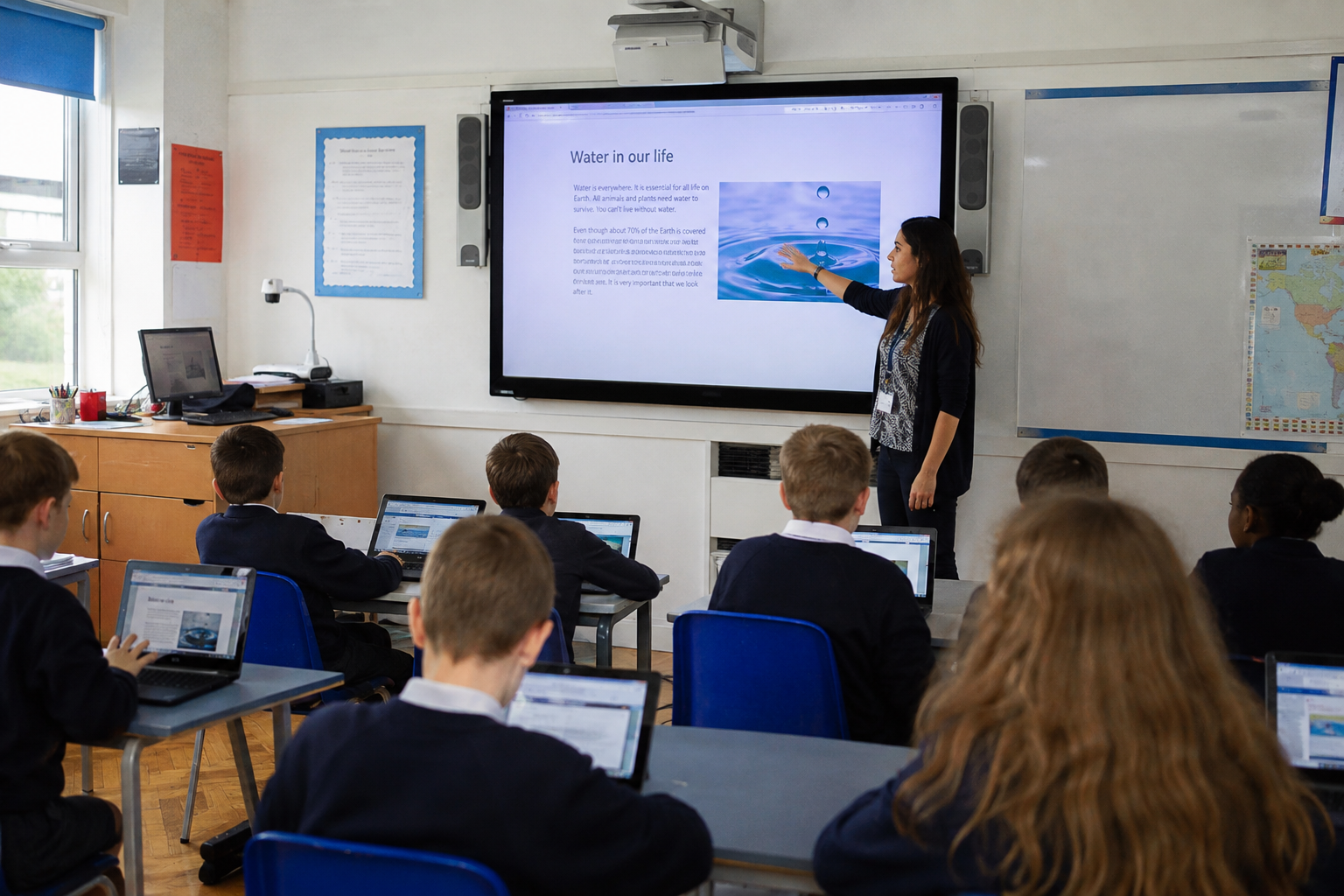
The future classroom will likely become more interactive. Smart boards, digital projectors, educational software, tablets, and other digital tools can make lessons more engaging.
Instead of only listening to a lecture, students can watch demonstrations, explore digital models, complete interactive exercises, and participate in online activities. For example, a science student can explore a virtual model of the human body, while a geography student can use digital maps to understand different parts of the world.
Interactive learning can make difficult concepts easier to understand. It can also encourage students to participate more actively instead of simply memorizing information.
Digital Skills Will Become Essential
The future job market will require strong digital skills. Students will need to understand how to use computers, online platforms, digital communication tools, and other technologies.
Digital literacy will become an important part of education. Students should learn how to search for reliable information, protect their privacy, communicate professionally online, and use technology responsibly.
Schools will also need to teach students how to work with new technologies instead of only teaching traditional academic subjects. Skills such as problem solving, creativity, communication, teamwork, and adaptability will remain important because technology continues to change.
The Changing Role of Teachers
Technology will change the role of teachers, but it will not make teachers unnecessary. Teachers will increasingly become mentors, guides, and learning facilitators.
Instead of spending most of their time delivering information, teachers can help students understand information, ask meaningful questions, solve problems, and apply knowledge to real situations.
Teachers will also need to improve their own digital skills. Professional development and technology training will help teachers use digital tools effectively. A teacher who understands technology can choose the right tools for different lessons and avoid using technology simply because it is available.
Better Access to Education
Digital technology has the potential to make education more accessible. Students living in remote areas may be able to access online courses and educational resources that were previously unavailable to them.
Digital resources can also help students learn at their own pace. Recorded lessons, online textbooks, educational videos, and digital practice materials can be accessed at different times.
However, equal access to technology remains important. Not every student has the same internet connection, devices, or learning environment. Governments, schools, and communities need to work together to reduce the digital divide so that technology creates opportunities for everyone.
The Importance of Critical Thinking
Having access to large amounts of information does not automatically mean students will become better learners. The internet contains useful information as well as incorrect and misleading content.
Future education must therefore focus strongly on critical thinking. Students should learn how to check sources, compare information, identify unreliable claims, and make decisions based on evidence.
These skills are especially important in a digital world where information can spread quickly. Education should teach students not only how to find information but also how to understand and evaluate it.
Digital Education and Student Creativity
Technology can also encourage creativity. Students can create presentations, videos, digital artwork, websites, podcasts, and other projects. These activities allow students to express their ideas in different ways.
Creative digital projects can also improve communication and problem solving. Instead of simply answering questions from a textbook, students can work on real projects and create something of their own.
The future of education should provide students with opportunities to experiment, make mistakes, develop ideas, and solve problems creatively.
Challenges of Digital Education
Although digital education offers many benefits, it also has challenges. Excessive screen time can affect concentration and reduce physical activity. Students may also become distracted by entertainment and social media while studying online.
Privacy and cybersecurity are other important concerns. Schools need to protect student information and teach students how to use digital platforms safely.
Another challenge is maintaining human connection. Education is not only about information. Students need relationships with teachers and classmates. They need teamwork, discussion, empathy, and social interaction.
For this reason, the future of education should create a healthy balance between technology and human interaction.
Conclusion
The future of education in a digital world will be more flexible, personalized, interactive, and accessible. Technology will provide students with new ways to learn and give teachers powerful tools to support their classrooms. Artificial intelligence, online learning, smart classrooms, digital resources, and personalized learning systems will continue to influence modern education.
However, technology should not replace the human side of education. Teachers will remain important because they provide guidance, motivation, understanding, and personal support. Students will also need strong communication, creativity, critical thinking, teamwork, and digital literacy skills.
The most successful education system of the future will not simply use more technology. It will use technology in a meaningful way to help students become confident, independent, creative, and responsible learners. By combining digital tools with effective teaching and strong human relationships, education can prepare students for a rapidly changing world and help them build successful futures.